2027 Marathon Trends and a Practical Guide to Marathon Photography
Photos that arrive right after the finish, bib-number and selfie search, sponsor-branded frames, more photographers along the course and explicit consent for face data. What will shape marathons in 2027, and where photographers should stand on race day.
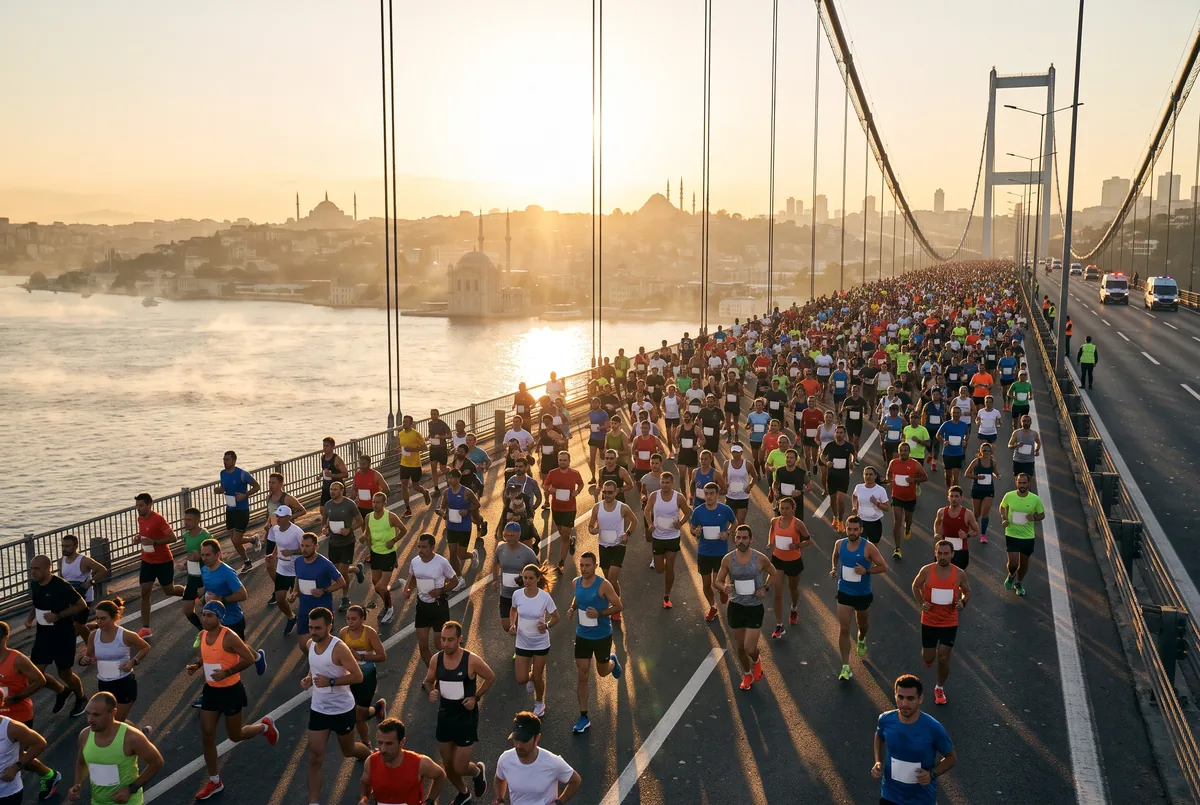
What a runner remembers about a marathon is rarely the split times. It is the feeling of the day: the crowd at the start, the wind on the bridge, strangers shouting their name in the last kilometre, the second they pass under the finish arch. In 2027, runners don’t just want to live those moments. They want to see them, in their hands, and share them straight away.
Below we look first at the trends that will shape marathons in 2027, then at a practical marathon photography guide for organizers and photographers. Whether you run a race, lead a running club, shoot on the course or simply run, feel free to jump to the section you need.
The trends shaping marathons in 2027
Runner experience matters as much as the race
Runners now judge a race on more than the course and the logistics. Smooth bib pickup, easy access to the start corrals, the welcome at the finish and what they take home afterwards all add up to the experience.
The part that lasts longest is the photos. A medal goes into a drawer; a finish-line photo becomes a profile picture and gets shared for years. Races that handle photos well see the payoff when registration opens the following year.
Photos right after the finish
A link that turns up days or weeks later no longer cuts it. Runners want their photos while the medal is still around their neck and the adrenaline hasn’t faded. That is also exactly when they are most likely to share.
So the workflow is changing in 2027: photographers upload while the race is still on, not after it ends, and runners reach their photos while they are still in the finish area.
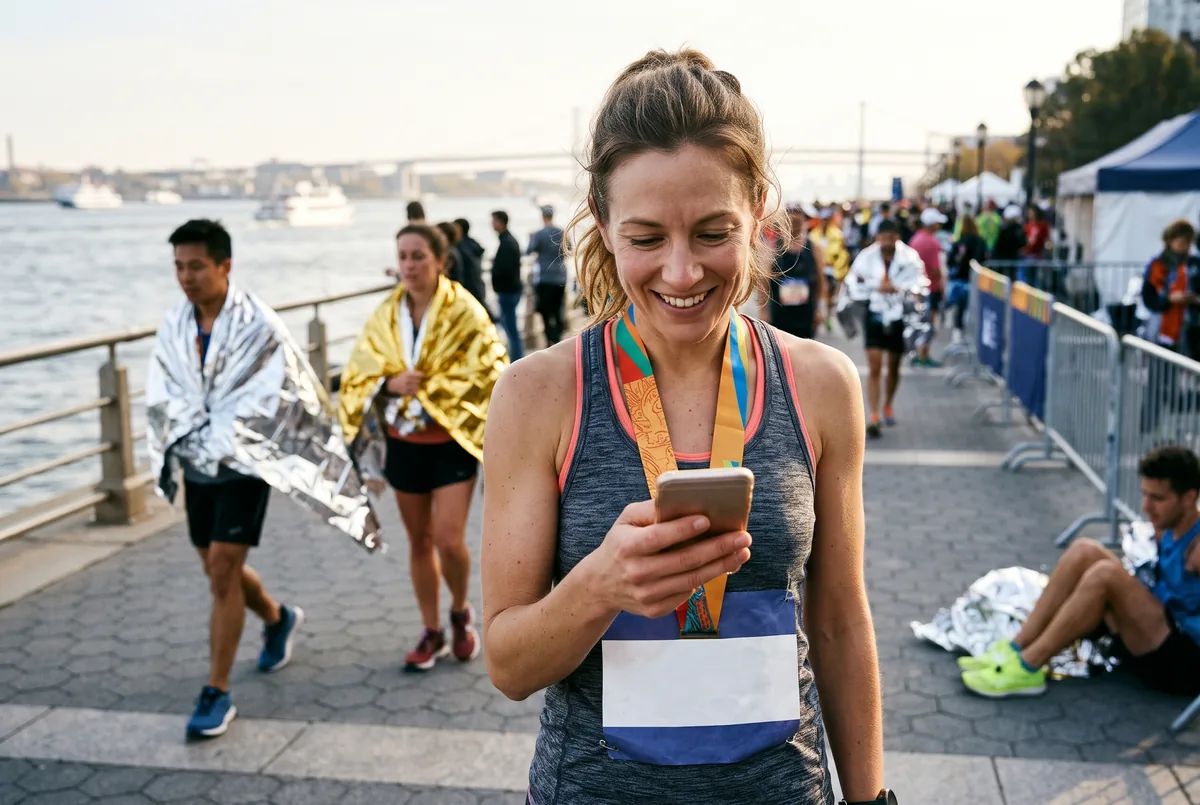
Bib-number and selfie search
Nobody can scroll through hundreds of thousands of photos looking for themselves. Two search methods are becoming standard:
- Bib-number search: the runner types their number and sees every photo where it appears.
- Selfie search: when the bib is hidden behind a jacket, an arm or another runner, one selfie still finds them.
The two work best together. A readable bib gives a quick result; when it can’t be read, face recognition fills the gap and no frame is lost.
Sponsor visibility through branded frames
For sponsors, the most valuable space is the runners’ own social feeds. In 2027 races are using that space deliberately: frames carrying the race name and sponsor logos, and watermarks that sit neatly on the photo.
Restraint is what makes it work. A logo that covers half the photo won’t get shared; a clean, balanced frame gets shared thousands of times. Views and downloads per event then become a concrete part of the sponsor report.
More photographers along the course
A single photographer at the finish line is no longer enough. Races are spreading photographers across the start, landmarks, the hard climbs and the final kilometre. That creates a new problem to manage: pulling every photo from every point into one gallery and matching each one to the right runner.
Sharing, from finish line to feed
Runners want full-resolution downloads they can post right away. Clubs collect their members’ photos and use them on their own channels. Every shared photo is free promotion for next year’s registration.
Privacy and consent for face data
Searching photos by face means processing a runner’s face data. GDPR in Europe and KVKK in Türkiye protect it as a special category of personal data. In 2027 organizers ask more than “how fast is it?”. They ask: is face data ever processed without explicit consent? Could someone use another person’s picture to get that runner’s photos? When is the data deleted?
Explaining the answers clearly on the registration form and the race page is now a basic condition of trust.
Marathon photography: a practical guide
Where to place your photographers
A good photo plan starts on the course map. These are the priority spots:
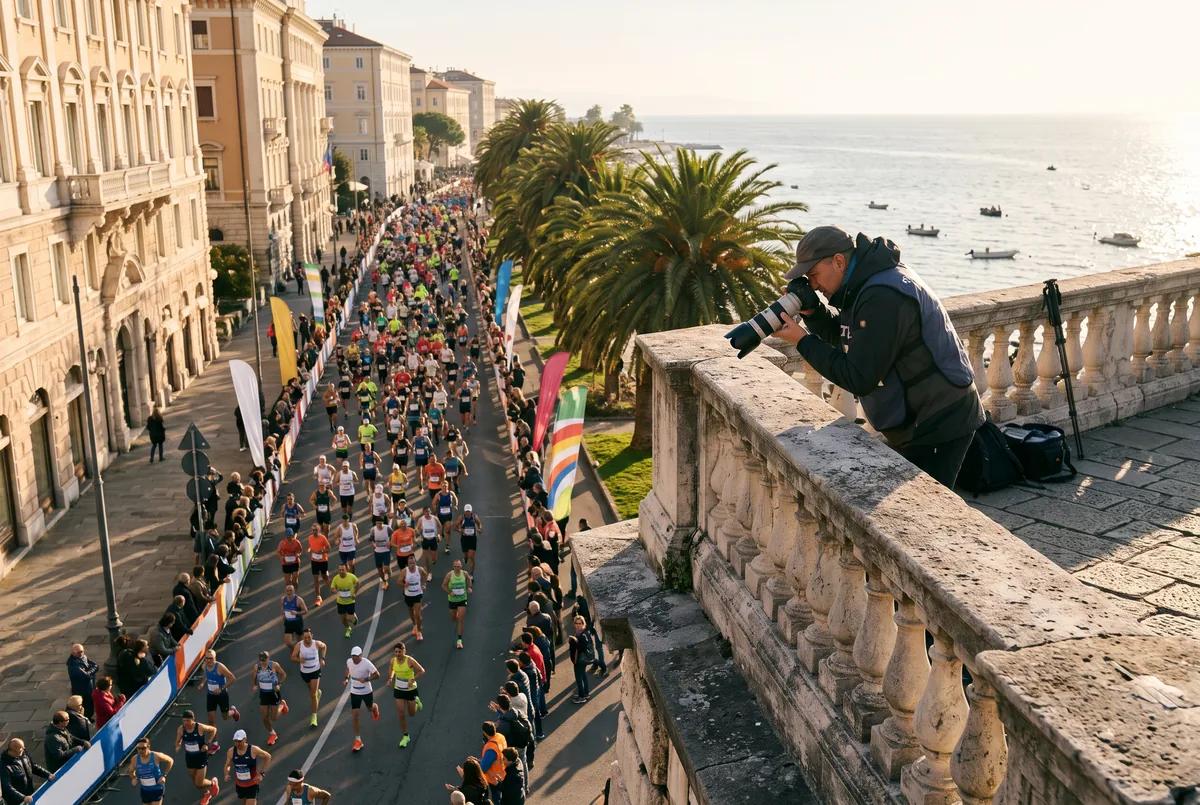
- The start: for the energy of the crowd, the waves leaving the line and the excitement of the first kilometres. A wide shot from a high point, plus close-ups for faces.
- Landmarks: bridges, waterfronts, historic squares. This is where the “I was here” shots come from. At the Istanbul Marathon, for example, runners start on the Asian side and cross the 15 July Martyrs Bridge to Europe; on a course like that, the bridge is a spot no photographer should miss.
- The last kilometre: where fatigue and determination show most clearly. The crowds thicken here and the most emotional faces appear.
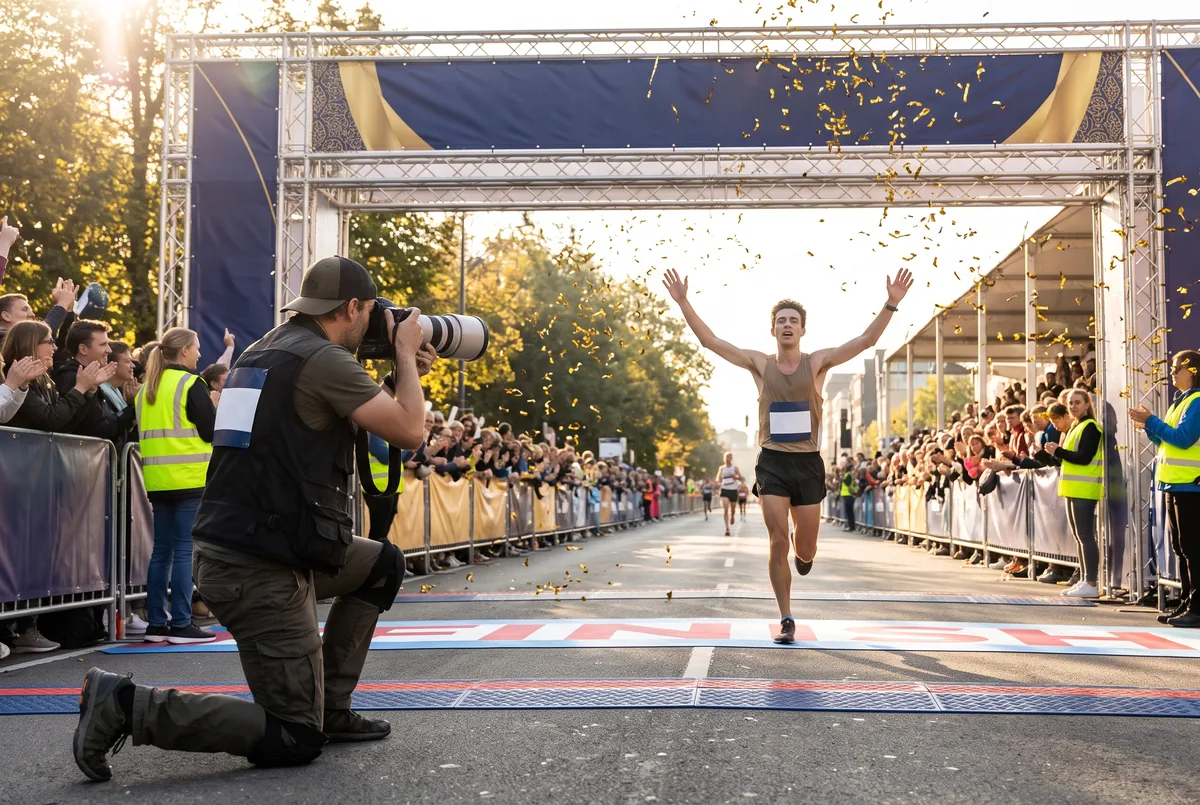
- The finish line: arms in the air, tears, hugs. Plan for at least two photographers at the finish: one facing the arch head-on, one covering the moments just after the line.
Shooting tips
- Use a fast shutter speed. 1/1000 s or faster is a safe starting point for freezing a runner.
- Turn on continuous autofocus. Runners are moving towards you, so focus needs to track them.
- Shoot slightly from the front. Pure side-on shots often hide the bib. A slight diagonal from the front shows both the face and the number.
- Get low at the finish. Kneeling or shooting from a low angle makes the arch and the runner look far more powerful.
- Check the light in advance. The sun is low at morning starts, so pick your spot with its direction in mind.
- Sync camera clocks. When every photographer’s camera shows the same time, photos flow in the right order.
- Pack spares. Extra batteries, memory cards and rain covers save the day on the course.
The delivery workflow
The best photo is worthless if it never reaches the runner. A solid workflow looks like this:
- Set up the event before race day. Don’t leave frames, sponsor logos and search settings for the morning of the race.
- Tell runners in advance. Promote the photo page with a QR code at bib pickup, in race emails and at the finish area.
- Upload during the race. Have photographers offload cards at intervals so the first photos are ready when runners finish.
- Bring every point into one gallery. Start, course and finish photos all go into the same event.
- Measure afterwards. Add views and downloads to your sponsor report.
2027 marathon photo plan checklist
- Mark photographer spots on the course map: start, landmarks, last kilometre and finish
- Plan for at least two photographers at the finish
- Sync camera clocks and pack spare batteries and cards
- Prepare the race frame and sponsor logos in advance
- Add explicit consent wording for face data to the registration form
- Put the photo page QR code at bib pickup and the finish area
- Set up a workflow for uploading while the race is on
Race photos with PhotoMea
PhotoMea is built for exactly this workflow. A runner types their bib number or takes one selfie, and in about two seconds every photo from the course appears. New ones keep arriving as the photographers upload.
Bib-number and selfie search: runners find their photos even when the bib isn't visible
Every photographer on the course uploads to the same event, so photos land in one gallery
Race frames and sponsor logos are added to the photos automatically
Views and downloads per event, ready for sponsor reports
No sign-up, email or phone number needed; runners can enter anonymously
20+ interface languages, so international runners feel at home
On privacy, PhotoMea is designed to comply with GDPR and KVKK. Face data is processed only with the runner’s explicit consent , a liveness check means nobody can use a printed photo or someone else’s picture to get another runner’s photos, and data is deleted at the end of the retention period . The analytics organizers see stay anonymous and aggregated. Our guide to data privacy in event photography goes into more detail.
For agencies and large organizers
We offer package pricing for agencies running several races and for corporate runs, plus white-label solutions that put your own brand in front. Get in touch for details.
Frequently asked questions
What are the marathon trends for 2027?
The main ones: a runner experience that covers before and after the race, photos right after the finish, bib-number and selfie photo search, sponsor visibility through branded frames, more photographers along the course, easy sharing and explicit consent for face data.
How do I find my marathon photos?
If your race uses PhotoMea, open the link on the race page or scan the QR code, then type your bib number or take a selfie. The photos you appear in show up within seconds.
What if my bib number isn’t visible in the photo?
If your bib was hidden by a jacket or an arm, search with a selfie instead. Face recognition finds you in frames where the number can’t be read.
Where should photographers stand at a marathon?
The priority spots are the start, landmarks such as bridges or historic squares, the last kilometre and the finish line. Having at least two photographers at the finish makes sure the most emotional moments aren’t missed.
How are sponsor logos added to race photos?
In PhotoMea you set up the race frame and sponsor logos once when you create the event, and they appear automatically on the photos runners receive.
Is face recognition at a marathon GDPR compliant?
Face data is a special category of personal data, so it needs the runner’s explicit consent, clear information and secure storage. PhotoMea processes face data only with explicit consent and is designed to comply with GDPR and KVKK. We recommend getting legal advice for your own race.
See how race photo search works on the PhotoMea sports events page , check pricing or download the app . Organizing a corporate run? Our corporate events page is worth a look too.
PhotoMea Team
Content Team
The PhotoMea team is dedicated to helping event organizers and photographers deliver memorable experiences through innovative photo sharing solutions.
Related Articles
HYROX Trends for 2027: Community, Race-Day Experience and Instant Photos
Eight runs, eight stations and packed stands. Here are the HYROX trends shaping 2027: the gym communities behind the sport, the athlete and spectator experience, and how to photograph a race so every athlete gets their shots fast.
Read More

6 Event Photo Sharing Trends for 2026
Guests now expect their photos while the event is still going. Here are the six shifts shaping event photo sharing in 2026, from instant face matching to stricter rules for biometric data.
Read More
If Nobody Remembers It, Why Host It? 2027 Corporate Event Trends
Premium experiential events, content-first hybrid formats, personalised guest journeys, measurable ROI, branded photos on LinkedIn and explicit-consent privacy. Here is what 2027 holds for launches, galas, conferences and company events.
Read More